No Partnership Agreement? The Recent Case Has Already Decided Your Profit Split
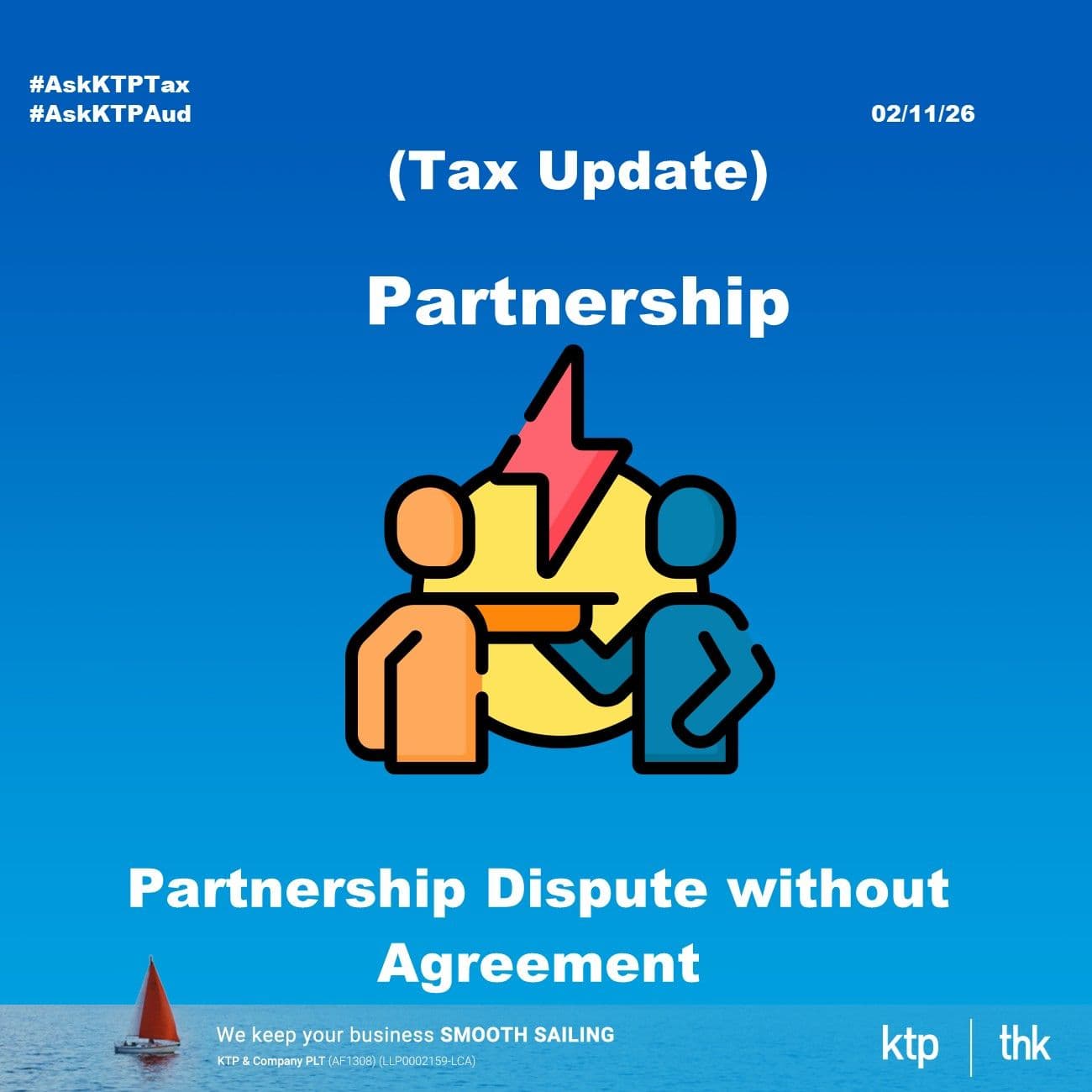
On Overview of Recent Court Case On Partnership Dispute
One partner put in the money. The other put in the sweat.
Both names went on the SSM registration. Nobody signed a partnership deed. For four years, the arrangement worked on trust.
Then the business closed, and the two partners remembered the deal very differently.
This is one of the most common disputes we see among Malaysian SMEs. And in most cases, the partners do not realise that the law had already settled their profit split on the day they started, because they never agreed one of their own.
If you run a business with a partner and have never signed a written partnership agreement, this article is about you. We explain the default rules under the Partnership Act 1961, how they play out when a partnership ends badly, and the five steps you should take now.
An illustrative scenario
The following scenario is hypothetical and is used to illustrate how the law applies. It is not based on any specific client or court case.
Ahmad and Wei Ming register a renovation business with SSM as a partnership. Ahmad injects RM100,000 of capital, opens the bank account, and handles payments. Wei Ming has no capital to contribute, but he has fifteen years of site experience. He manages the workers and the jobs.
They never sign a partnership agreement. Each month, Ahmad transfers Wei Ming a fixed sum, which they loosely call “site pay.” Project receipts and expenses run through the same account. No one prepares annual accounts.
Four years later, the business closes. Wei Ming asks for his share of the profits. Ahmad says Wei Ming was never really a partner. In his view, Wei Ming was paid for his work, and the profits belong to the person who put up the money.
Who is right? Under the Partnership Act 1961, Ahmad is likely in a much weaker position than he thinks.
Key issues
1. Equal sharing of profits is the default position
Section 26 of the Partnership Act 1961 sets out the rules that govern the rights and duties of partners, subject to any agreement, express or implied, between them.
The first of those rules, in Section 26(a), is that all partners are entitled to share equally in the capital and profits of the business, and must contribute equally towards losses.
Notice what the rule does not say. It does not link profit share to capital contributed. In our scenario, Ahmad’s RM100,000 does not, by itself, entitle him to a larger share of profits. Unless he can show that the two partners agreed otherwise, the starting point is 50:50.
2. Partners are not entitled to a salary unless agreed
Section 26(f) provides that no partner is entitled to remuneration for acting in the partnership business, again subject to any agreement.
This cuts both ways. Ahmad may argue that the monthly “site pay” shows Wei Ming was an employee, not a partner. Wei Ming may argue that the payments were simply drawings against his share of profits. Without a written agreement, the label on those transfers is open to dispute, and both partners end up arguing over what they meant years earlier.
3. Without accounts, nobody can prove the profits
Even if Wei Ming is entitled to half the profits, someone has to work out what the profits actually were.
In our scenario, there is no profit and loss account. Receipts and expenses are mixed in one bank account. Bank statements show money moving, but they do not show net profit. Reconstructing four years of accounts after a dispute has started is slow, expensive, and often contested line by line.
4. The duty to render true accounts
Section 30 of the Partnership Act 1961 states that partners are bound to render true accounts and full information of all things affecting the partnership to any partner or his legal representatives.
Payment vouchers, bank transfer slips, and a self-compiled spreadsheet are unlikely to meet this standard. In our scenario, Ahmad controlled the money, so the practical burden of explaining where it went falls heavily on him. The partner who holds the bank account carries the risk of poor records.
The tax dimension
A dispute between partners is only half the exposure.
A partnership is required to file Form P for each year of assessment, and the precedent partner issues Form CP30 to each partner showing his share of the partnership income. Each partner then reports that share in his own tax return.
Where partnership income runs through a mixed account and no annual accounts are prepared, the Form P figures are unlikely to be accurate, if the returns were filed at all. That creates audit exposure with LHDN, for the partnership and for each partner, on top of any claim between the partners.
Five steps you should take now
If you operate through a partnership, we recommend the following:
- Sign a written partnership agreement. Set out capital contributions, the profit sharing ratio, any partner salaries, drawings, and what happens when a partner leaves or the business closes.
- Separate the money. Open a dedicated business bank account and never run partnership funds through a personal account.
- Prepare annual accounts. Produce a profit and loss account and balance sheet every year, and share them with every partner.
- File on time. Submit Form P and issue CP30 to each partner based on the agreed profit sharing ratio.
- Close out properly. When the business ceases, finalise the accounts and agree the distribution in writing before you close the bank account
Disclaimer: This article is for general information only and does not constitute legal, tax, or professional advice. You should seek specific advice based on your own circumstances.
In our experience, partnership disputes rarely start with fraud. They start with trust, a handshake, and no paperwork. Years later, the partners remember the arrangement differently, and the only objective evidence is a bank statement that nobody can reconcile.
The Partnership Act 1961 fills the gaps you leave. If you do not agree a profit sharing ratio, Section 26(a) gives you one. If you do not keep proper accounts, Section 30 puts the risk squarely on the partner who controlled the money.
A written agreement and annual accounts cost a fraction of a partnership dispute. If you are running a partnership today without either, now is the time to fix it.
Come say hello.
Two firms in the heart of Taman Molek, Johor Bahru.
KTP & Company PLT
Wisma KTP, 53, 53-01 & 53-02, Jalan Molek 1/8, Taman Molek, 81100 Johor Bahru, Johor, Malaysia